
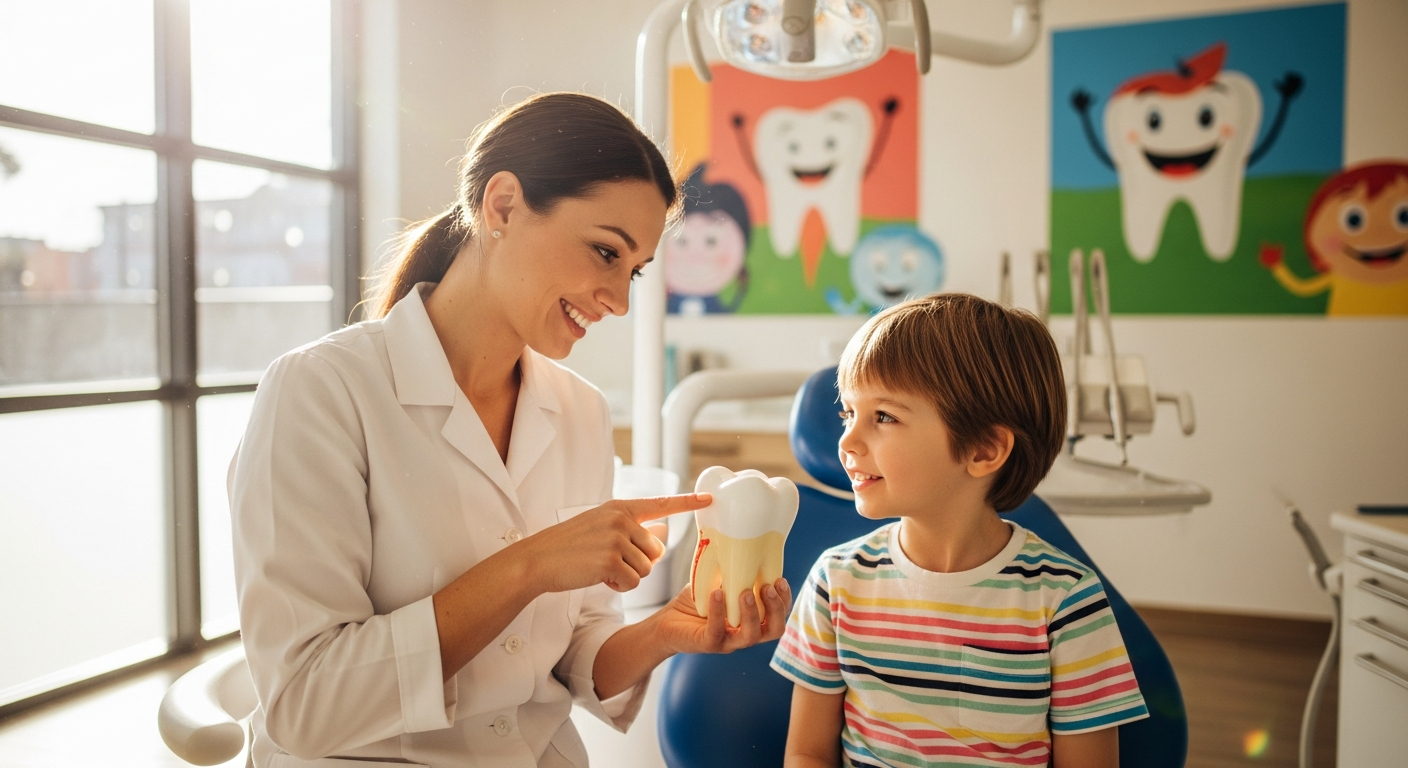
Children's Dentist in Amstelveen: Dental Care Tips for Parents
Good oral health habits formed in childhood last a lifetime. As a parent in Amstelveen, you play a central role in shaping how your child feels about their teeth — and their children's dentist. At Dentinn, we love welcoming young patients and helping them build a positive relationship with dental care from the very beginning.
This guide covers everything parents need to know: when to book the first visit, how to make it a good experience, and how to care for children's teeth at every stage.
When Should Children First Visit a Dentist?
The general recommendation from Dutch dental associations is: book the first appointment when the first tooth appears, or no later than age 1. Regular check-ups from early childhood are one of the most important investments in long-term oral health — as we explain in our guide on the importance of regular dental visits. This may seem early, but there are good reasons:
- Your dentist can check that development is on track
- You receive personalised advice on cleaning and diet
- Your child begins to associate the dental chair with a friendly, safe experience — before any treatment is ever needed
At Dentinn Amstelveen, the first appointment for a young child is relaxed and short. There are no drills involved — just a look, a friendly interaction, and advice for you as a parent.
How to Prepare Your Child for Their First Visit
Children take cues from the adults around them. Here are a few ways to set a positive tone:
- Use positive language: say 'the dentist checks your teeth to keep them strong' rather than 'it won't hurt'
- Play dentist at home: let your child count your teeth with a torch, then count theirs
- Read books about visiting the dentist — several popular Dutch-language children's books cover this topic
- Avoid transferring your own anxiety: if you feel nervous about dental visits yourself, try not to share that with your child
- Celebrate afterwards: a small reward after the visit reinforces a positive association
Caring for Baby Teeth
Baby teeth matter. They hold space in the jaw for permanent teeth, help children chew and speak properly, and affect the development of adult teeth. Decay in baby teeth can cause pain, infection, and early loss — which disrupts the growth of the teeth that follow.
When to start cleaning: as soon as the first tooth appears. Use a small, soft-bristled toothbrush and a rice-grain-sized amount of fluoride toothpaste (1000 ppm). From age 3, increase to a pea-sized amount.
How to brush: clean all surfaces of every tooth, twice a day. Until around age 7–8, children need a parent to brush for them or carefully check afterwards — they simply don't have the motor control to do it properly alone.
Nutrition and Tooth Health
What your child eats and drinks has a direct impact on cavity risk. For a full guide, see our article on cavity prevention and stopping tooth decay. Practical guidance:
- Limit sugary drinks — fruit juice, sports drinks, and soft drinks are the single biggest contributor to tooth decay in children. Water is always the best drink
- Avoid prolonged bottle or sippy cup use — especially with milk or juice, which pools around teeth if carried to bed
- Snack smarter — cheese, unsalted nuts, raw vegetables, and plain yoghurt are tooth-friendly snacks. Raisins, dried fruit, and sticky sweets are high risk
- Eat sweets at mealtimes — if your child eats sweets, it's better to have them during a meal than as a standalone snack, reducing the number of acid attacks per day
Common Children's Dental Treatments at Dentinn
Most children's visits are routine check-ups and cleaning. Occasionally, treatment may be needed:
- Fluoride varnish: a quick application of concentrated fluoride to strengthen enamel — recommended twice a year for children at higher cavity risk
- Fissure sealants: a thin protective coating applied to the chewing surfaces of back teeth, sealing the grooves where bacteria collect
- Composite fillings: tooth-coloured fillings for cavities
- Orthodontic assessment: from around age 7, we can assess whether early orthodontic advice is needed
What About Teenagers?
Teenagers often become resistant to dental visits — and dental care in general. Hormonal changes can also affect gum health, making teenagers more susceptible to early gum inflammation. Encouraging regular check-ups (every 6 months), reinforcing the importance of nightly brushing and flossing, and monitoring wisdom tooth development are all priorities during the teenage years.
For teenagers interested in orthodontic treatment, Dentinn offers both traditional orthodontic treatment and Invisalign Teen.
Book a Children's Check-up at Dentinn
Our friendly team welcomes children of all ages. Appointments in Dutch, English, and Turkish.
Book a Check-up →Frequently Asked Questions
Yes. Dental care for children up to age 18 is included in the basic health insurance (basisverzekering) and costs nothing extra. This covers check-ups, X-rays, fillings, extractions, and orthodontic assessments.
📍 Dentinn Dental Clinic — Biesbosch 217, 1181 JC Amstelveen. We welcome children and families from across the Amstelveen and Amsterdam area. Book a children's check-up today.