Dental Implants After Bone Loss: Can You Still Get an Implant?
1. Introduction
Losing a tooth can change more than your smile. Over time, the jawbone in the empty space may become narrower or shallower. If you are researching dental implants after bone loss, it is natural to wonder whether treatment is still possible. Bone loss does not automatically rule out an implant: some people can proceed without extra treatment, while others may need a graft or another option. Only an individual examination can establish what is suitable.
In brief: A dental implant may remain an option after bone loss, even years after tooth loss. Suitability depends on bone volume and quality, gum health, nearby anatomy and overall health. Examination and appropriate imaging guide planning. Some people need grafting; others may choose a bridge or denture. Grafting adds treatment and cannot guarantee implant eligibility.
2. Can You Get a Dental Implant If You Have Bone Loss?
Often, yes—but not in every case, and not always without preparatory treatment. An implant needs an appropriate position and enough bone of suitable volume and quality for the treating clinician to plan placement. If bone has reduced, a dentist may consider grafting, a suitable alternative placement approach, or a non-implant restoration. Severe or unfavourably located bone loss can limit the options.
No single measurement or online checklist can confirm eligibility. The dentist also considers gum and tooth health, medical history, medicines, cleaning and your expectations. A scan cannot replace an examination. If you have been told there is “not enough bone,” ask where the limitation is and which alternatives were considered. For an overview of treatment stages, read Dentinn’s dental implant guide.
3. Why Does Jawbone Loss Happen After Losing a Tooth?
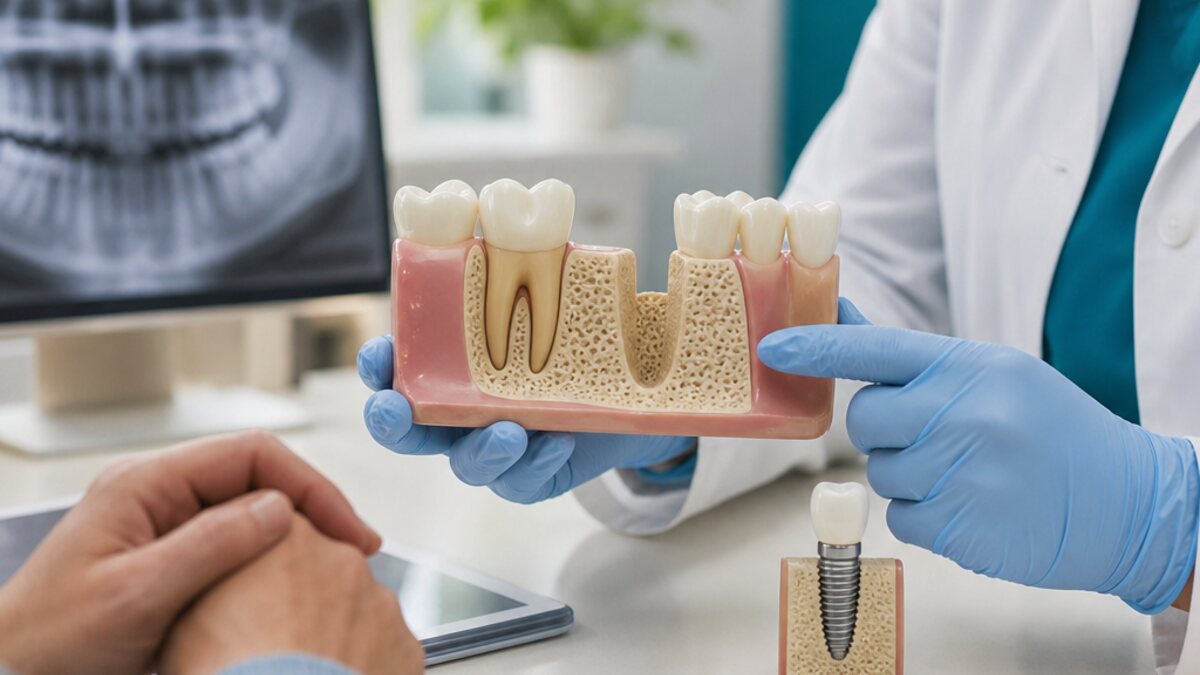
Jawbone supports the teeth and responds to forces transmitted through their roots during chewing. After a tooth is removed, that local stimulation changes. The bone around the former socket can remodel, and the ridge may lose some width or height. This is one reason a space can look or feel different months or years after extraction.
The extent and timing vary with the cause of tooth loss, jaw shape, healing, gum health and individual biology. Appearance alone cannot show whether a particular implant has enough bone. Gum disease affecting remaining teeth can also cause bone loss and needs separate attention.
4. How Do Dentists Determine Whether You Have Enough Bone?
Assessment combines a conversation, an examination and imaging chosen for the clinical question. The dentist reviews your dental and medical history, checks the missing-tooth area, gums and bite, and considers how a replacement would fit with neighbouring teeth and the opposing bite.
Dental X-rays can show relevant anatomy and existing conditions. A panoramic image (OPG) offers a broad view but may not show every detail needed. Three-dimensional CBCT may be considered when clinically indicated to clarify bone dimensions or the position of nerves or the sinus; it is not automatically needed for everyone. The clinician selects imaging when its expected benefit justifies it.
Planning considers bone volume, shape and quality, the proposed implant position, gum health and nearby anatomical boundaries. Ask what the images show and how they affect your choices. The aim is a plan suited to your mouth.
5. What If You Don’t Have Enough Bone for an Implant?
“Not enough bone” does not point to one universal solution. Depending on where and how much bone is missing, a clinician may discuss one or more of these options:
- Bone grafting: Graft material may build or support a ridge in selected cases. Method, materials and timing depend on the site; some procedures also use a membrane.
- Sinus augmentation: In suitable upper-back-jaw cases, this may add bone beneath the sinus to allow implant planning. It is not suitable for every case.
- Alternative implant placement: A different position or design may be considered when anatomy and the restorative plan support it; it is not right for everyone.
- Bridge: A fixed bridge can replace a tooth using suitable neighbouring teeth for support, including when implant surgery is unsuitable or not preferred.
- Removable denture: A partial or full denture replaces teeth and can be removed for cleaning; it may suit people who prefer a non-surgical option.
Not everyone needs grafting, and an implant may remain unsuitable even with extra procedures. A graft may not develop as intended, so discuss that risk and whether referral is appropriate; not every practice provides every grafting or sinus procedure. Any surgical option has case-specific risks: ask about expected benefits, risks and alternatives. Referral to a clinician with relevant expertise may be needed. A bridge or denture may better fit your health, priorities or budget.
6. Does Bone Grafting Make Dental Implant Treatment More Complicated?
It can add treatment stages, healing time, cost and uncertainty. Grafting adds or supports bone where needed for a planned restoration. It may be done before implant placement, at the same time or in stages; the treating dentist explains whether an approach is suitable.
Healing time varies with the site, graft, health and planned stages; there is no universal timetable. Follow-up and home-care instructions matter. Ask about warning signs, reviews and the plan if healing differs from expectations. Grafting cannot guarantee an implant will be possible or successful.
7. What Factors Affect Dental Implant Success?
Outcomes depend on the mouth’s condition, how the restoration functions and whether it can be cleaned. These factors inform candidacy and care, but none alone gives an automatic yes or no:
- Oral hygiene: Daily cleaning and professional reviews help monitor the gums and implant area.
- Gum health: Active disease needs attention; previous gum problems may affect planning and maintenance.
- Smoking: Discuss smoking openly because it may affect healing and care.
- Health conditions: Diabetes management and other health conditions can influence planning. Share an up-to-date history and coordinate care with your medical team; do not stop or change prescribed medicines unless the prescriber advises you to.
- Bone, bite and follow-up: Bone characteristics, bite forces, regular reviews and following care instructions inform the plan and ongoing maintenance.
Having a health condition does not automatically make you unsuitable, but the clinician needs enough information to assess risk and tailor care.
8. Dental Implants vs Bridges vs Dentures
Each option has trade-offs. Actual treatment depends on missing teeth, surrounding teeth and gums, available bone, preferences and budget.
| Option | Is surgery usually involved? | May neighbouring teeth need preparation? | Stability and removability | Duration considerations | Maintenance | When it may be considered |
|---|---|---|---|---|---|---|
| Implant with crown | Yes; placement surgery is involved, with extra procedures only if indicated. | Usually not, because the implant supports its own crown. | Fixed in the mouth; not removable by the patient. | Can involve healing and multiple stages; grafting, if needed, can add time. | Careful daily cleaning and professional maintenance are needed. | A person seeking a fixed replacement when health, anatomy and planning support it. |
| Fixed bridge | Usually no implant surgery; other dental treatment may be needed. | Often, supporting teeth are prepared; suitability depends on their condition. | Fixed in the mouth. | Timing depends on preparation, laboratory work and the teeth involved. | Clean under and around the bridge as instructed; supporting teeth need care. | When suitable neighbouring teeth can support a fixed replacement, including when an implant is not chosen. |
| Removable denture | Usually no implant surgery. | Often no preparation of neighbouring teeth, though individual dental work may be needed. | Removable for cleaning; stability varies with design and anatomy. | Can often be made without implant-healing stages; adjustments may be needed. | Remove and clean as instructed; fit and oral tissues should be reviewed. | When a removable, non-implant option is preferred or clinically appropriate. |
An implant is independent of adjacent teeth but involves surgery; a bridge is fixed but can require tooth preparation, while a denture is removable and may feel less stable. The best choice depends on your situation and preferences. See Dentinn’s crowns and bridges service information.
9. What Does Dental Implant Treatment Cost in Amstelveen?
Costs depend on the implant and crown, assessment and imaging, laboratory work, preparation and complexity. Grafting or sinus augmentation may add cost. Ask for a written, individual estimate showing inclusions and possible extras. See Dentinn’s implant cost guide.
Dentinn’s Straumann campaign starts from €1,800 and includes a premium Straumann implant, custom zirconium crown, required OPG scans, initial consultation and complete treatment planning. Bone grafting/bone powder is excluded. This is a starting price, not a guaranteed total. Sinus augmentation may add cost. Ask which imaging and preparatory procedures are included in your individual estimate. See the Straumann implant offer.
Straumann implant offer — from €1,800
Premium Straumann implant, custom zirconium crown, required OPG scans, initial consultation and complete treatment planning. Bone grafting/bone powder is excluded; confirm your individual estimate.
View campaign details →Brand is only one part of treatment; planning, tissue health, restoration and maintenance also matter. Dentinn’s Straumann implant comparison can help you prepare questions. No brand replaces an individual assessment or guarantees an outcome.
10. What Should You Ask at an Implant Consultation?
A consultation helps you understand the diagnosis and compare options; it is not a commitment. Bring your medicines and health information. Ask:
- Do I have sufficient bone for an implant in the proposed position, and what do my images show?
- Would I need a bone graft or sinus augmentation? Why, and what are the alternatives?
- What other options are suitable for me, including a bridge or removable denture?
- What exactly is included in the written estimate, and what may cost extra?
- What stages are planned, and how long could the complete treatment take in my case?
- What maintenance will be required, and how will we monitor the implant and gums?
Ask for explanations of unfamiliar terms and take time to decide; the plan should identify recommendations and uncertainties.
11. Frequently Asked Questions
Possibly. Time alone does not determine eligibility; examination and suitable imaging assess current bone and options.
12. Conclusion: Get an Individual Assessment
Bone loss can complicate implant treatment, but does not automatically rule it out. An assessment can explain whether existing bone is suitable, whether grafting or another approach is reasonable, and how a bridge or denture compares. Decide using your health, anatomy, priorities and a clear estimate—not assumptions based on time.
Dentinn’s dental implant service in Amstelveen can be discussed as part of an individual treatment assessment. If you are considering an implant after years without a tooth, you can contact the Dentinn team to arrange a conversation about the next appropriate step.