
Dental Insurance in the Netherlands: Understand Your Estimate
Does Dutch basic insurance cover adult dental care?
For most people aged 18 and over, routine dental care—such as a regular check-up or hygiene visit—is not covered by the basic health insurance package. A few defined exceptions may apply, and supplementary dental insurance may reimburse some costs under that specific policy’s terms, limits and conditions. Children under 18 and people with qualifying special-care needs have different rules. Check your insurer’s current policy and ask for written confirmation before relying on reimbursement.
The Dutch government’s dental-cost reimbursement guidance distinguishes care for people under 18 from adult care and advises checking with your insurer. The National Health Care Institute’s oral-care information describes the general rules and exceptions. Coverage can change; this article is a guide, not an insurance decision.
What is the difference between basic and supplementary dental cover?
The basic package is the statutory health-insurance package. For adults, most routine dentist and hygienist care sits outside it, though specified care may be covered in particular situations. For children under 18, a broader group of dental treatments is generally included, but not every treatment—for example, orthodontics is not routinely covered. Special dental care may qualify under separate criteria.
Supplementary dental insurance is optional and differs by insurer and policy. One plan may reimburse a percentage up to an annual maximum; another may have treatment exclusions, waiting periods, acceptance rules or other limits. The premium can also be higher than the amount you expect to claim. Do not assume that buying a policy shortly before treatment will cover a known need. Read the policy schedule and ask the insurer how it applies to your planned procedure.
For a planned treatment, confirm the insurer’s answer using the treatment codes and estimated amounts on the dentist’s written estimate. Ask whether the insurer needs a prior authorisation or additional documents, whether a yearly maximum has already been partly used, and whether a deductible or personal contribution applies. Adults may owe the compulsory deductible for particular care reimbursed from basic insurance; supplementary policies have their own terms. Do not rely on a general statement that “dental is covered.”
How do you read a written dental treatment estimate?
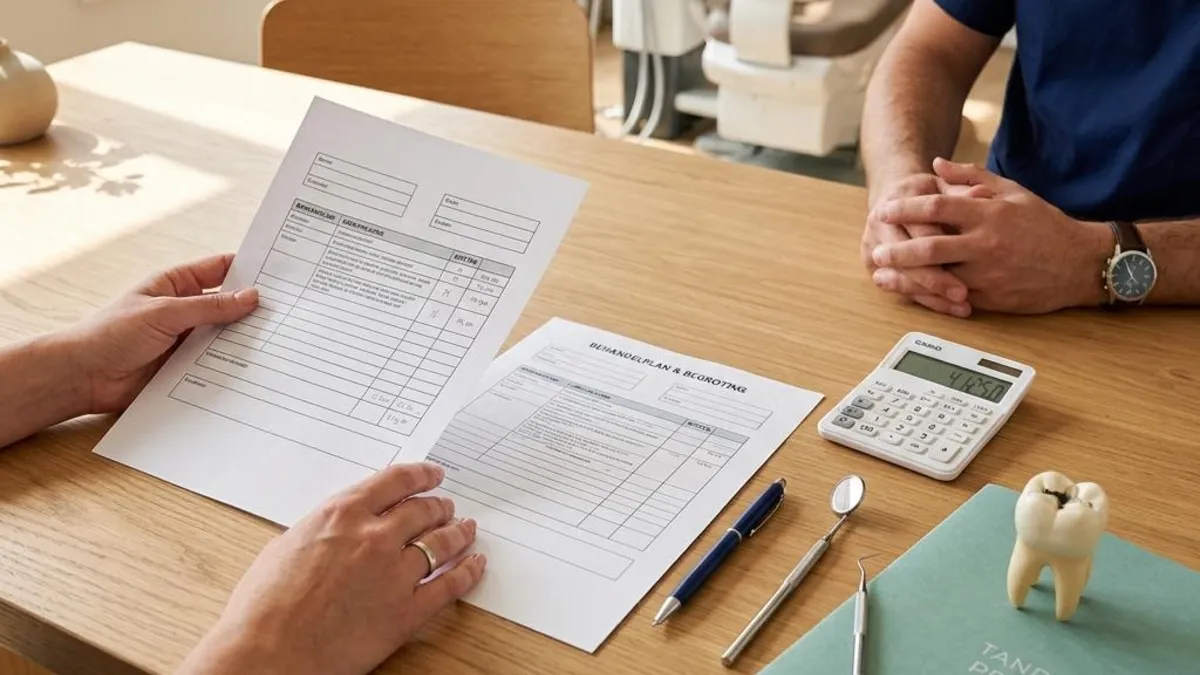
A written estimate, or begroting, is a plan of proposed care and expected costs; it is not a promise that an insurer will reimburse it. Read it line by line. It should help you identify which treatment is planned, which costs are known and what might change after examination or during treatment.
Under the NZa’s 2026 Regulation of Oral Care, a treatment total of €250 or more requires a non-binding estimate before treatment; below €250, you can request one. An estimate may be given orally for totals from €250 to under €500 only if you and the provider agree and the agreement is recorded. From €500, it must always be written or digital. It lists the planned services and quantities, fee per service, total, and material, technical and laboratory costs separately. See the NZa’s 2026 regulation and the KNMT’s current explanation of treatment estimates.
- Treatment and code: What procedure is proposed, and what does each listed code refer to? Ask the dentist to explain unfamiliar codes in plain language.
- Quantity and fee: Check how often each service is planned and the fee shown for it; confirm the total adds up.
- Included items: Ask whether consultation, X-rays, anaesthesia, laboratory work, temporary restorations and follow-up are included or separate.
- Possible changes: Ask what could change after clinical findings, who will discuss any change and whether you will receive an updated estimate before additional planned care.
- Your expected share: Keep the clinic’s estimated fee separate from the insurer’s written reimbursement decision. Ask your insurer for the expected reimbursement and calculate any remaining amount, subject to policy conditions.
If you are considering a larger plan, ask for alternatives, stages and timing in writing. You can ask what is urgent, what can be scheduled later and whether a second opinion is reasonable. Dentinn’s guide to dental visit costs in the Netherlands explains why the total depends on the treatment needed, rather than one flat visit price. For planned care, see the dental check-up service and dental hygiene service.
What if the estimate is above your budget?
Tell the dental team before treatment begins. Ask which parts are essential now, whether there are clinically suitable alternatives, and whether the plan can be phased. A cheaper option is not automatically appropriate, and postponing care may not be safe if there is pain or infection; make the decision with a dentist. Ask for the likely costs and trade-offs of each option rather than choosing from price alone.
Dentinn gives written treatment information so you can ask questions before deciding; general cost guidance is not a substitute for your own estimate. If a treatment involves a tooth replacement, our implant cost guide describes factors that can affect an individual plan. You can contact Dentinn’s team with questions about arranging care.
Questions to ask your insurer and dentist
- Is this specific procedure covered under my basic or supplementary policy, and under which conditions?
- What percentage or amount can be reimbursed, what annual maximum remains and is there a waiting period or exclusion?
- Does a deductible or personal contribution apply, and do you need prior approval?
- Can the insurer confirm its answer in writing using the codes on the estimate?
- Which items are included in the dentist’s estimate, and what may change after examination?
Frequently asked questions
Usually not for adults aged 18 and over. Defined exceptions exist; check the current government guidance and your own insurer for your circumstances.
Check the policy, estimate and personal contribution
Before treatment, compare the proposed care on the written estimate with your policy’s exact conditions and ask the insurer for a clear answer. Basic adult dental cover is limited, supplementary reimbursement is not guaranteed, and exceptions depend on the circumstances. Dentinn Team provides general information, not financial, insurance or clinical advice; confirm coverage with your insurer and treatment needs with a dentist.