
After Invisalign: Do You Need Retainers, and Can Your Teeth Become Crooked Again?
1. Introduction
Finishing Invisalign can feel like reaching the finish line, but it is not necessarily the end of orthodontic care. The teeth have moved; the next job is to help them remain in their new positions. Retention is part of treatment, not an optional extra to discover later.
Direct answer: Yes, teeth can shift after Invisalign, so most people need retainers to help maintain their result. How often and how long to wear one depends on your teeth, treatment and clinician’s instructions; many people need ongoing, often night-time, wear. Retainers reduce the risk of unwanted movement but cannot guarantee that teeth will never change.
This matters whether you are finishing aligners now, considering treatment, or noticing movement after earlier braces. At Dentinn in Amstelveen, the retention plan should be discussed as part of the whole orthodontic plan—not treated as a one-size-fits-all promise.
2. Can Your Teeth Become Crooked Again After Invisalign?
They can move again after active treatment. Orthodontic relapse describes some or all of the movement of teeth back toward earlier positions. The amount and timing are different for each person. Some notice a small change; others may see a more noticeable shift, particularly if a retainer is not worn as instructed or no longer fits.
Teeth also change gradually throughout adult life, even after orthodontics. A retainer helps maintain the planned position, but it does not freeze the mouth permanently. Keep follow-up appointments and ask your treating clinician what to do if your retainer feels loose, tight, damaged or different. For the broader treatment context, see Dentinn’s Invisalign and clear-aligner guide.
3. Why Do Teeth Move After Orthodontic Treatment?
Teeth are held by supporting tissues, including the periodontal ligament and surrounding bone. When teeth are moved, these tissues adapt and remodel around the new positions. The process does not instantly stop on the day the last active aligner is removed. A retainer helps hold teeth while the supporting tissues adapt, and ongoing wear helps manage the natural tendency for teeth to move.
There are also lifelong changes in the bite, jaw and facial tissues. Habits, dental work, gum health and normal changes over time can influence tooth position. These are reasons to keep a clinician-guided retention plan; they are not evidence that every patient will experience relapse.
4. What Is an Invisalign Retainer?
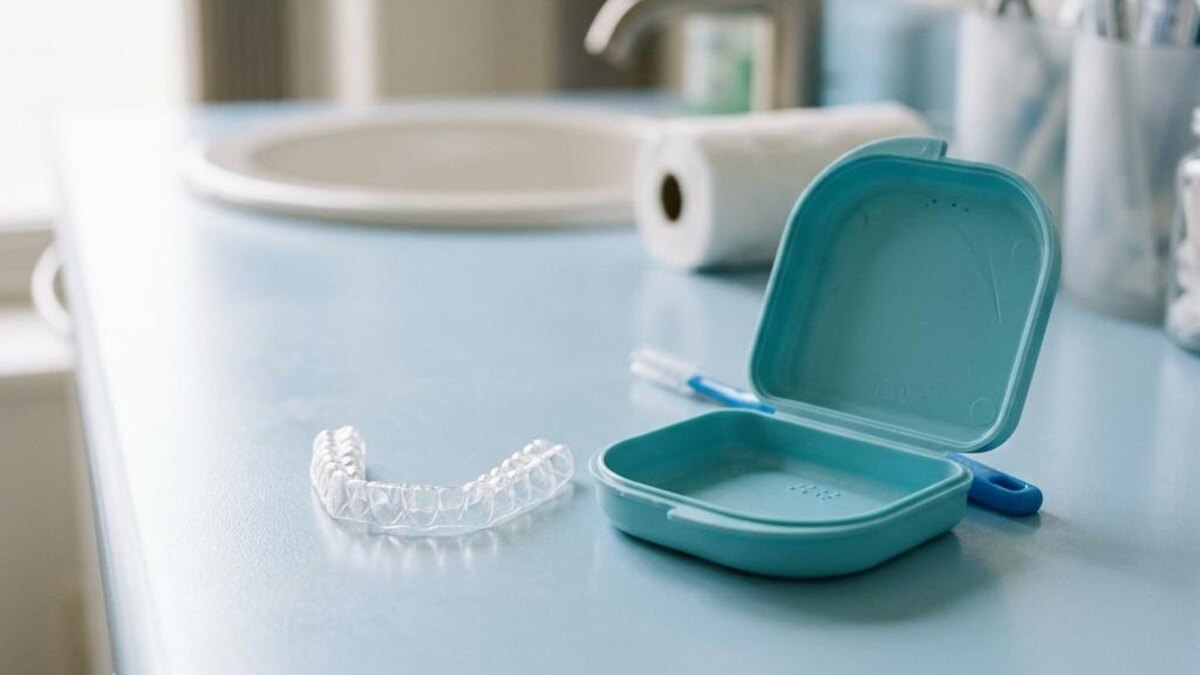
A retainer is an appliance intended to help maintain tooth positions after active orthodontic treatment. A removable retainer is taken out for eating and cleaning and worn on the schedule prescribed for you. A fixed retainer is a fine wire bonded behind selected teeth. It stays in place and is not removed by the wearer.
The clear aligners used to move teeth during treatment and a post-treatment retainer are not automatically interchangeable. Their design, fit and intended use can differ. Do not assume that your last aligner is a long-term retainer unless your treating clinician explicitly says so.
Your clinician may recommend a removable retainer, a fixed one, or both, depending on the movements and your individual circumstances. Dentinn’s Invisalign service in Amstelveen describes the local treatment option; ask specifically how retention fits into your proposed plan.
5. How Long Do You Need to Wear Retainers After Invisalign?
Retention is generally a long-term commitment. Many patients need ongoing retainer use, often at night, but there is no single schedule that applies to everyone. Your initial instructions may differ from your later routine, and the treating clinician should set and review both according to your case.
Follow the schedule you were given rather than reducing wear because the teeth look straight. If you have misplaced a retainer, it has cracked, or it no longer fits, contact your provider promptly for advice. Do not force a retainer over teeth if it does not seat comfortably or appears distorted.
6. Fixed vs Removable Retainers: Which Is Better?
Neither type is best for everyone. A fixed retainer can hold selected teeth continuously without relying on remembering to insert it, but it needs careful cleaning and regular monitoring. A removable retainer is easier to take out for cleaning and gives flexibility, but it only helps when worn as directed.
| Consideration | Fixed retainer | Removable retainer |
|---|---|---|
| Visibility | Bonded behind selected teeth; usually less visible from the front. | Clear versions are often discreet, but can be visible when worn. |
| Removability | Not removed by the wearer; a dental professional manages repair or removal. | Can be removed for meals and cleaning; wear it as instructed. |
| Cleaning | Requires careful cleaning around the wire and between teeth. | Remove and clean separately following the product and clinician instructions. |
| Loss or damage | Cannot be misplaced after removal, but the wire or bond can loosen or break. | Can be lost, warped or damaged if misplaced, mishandled or exposed to heat. |
| Monitoring and maintenance | Needs checks for bond integrity, hygiene and changes around the wire. | Needs checks for fit, wear, cleanliness and whether replacement is needed. |
| Patient compliance | Does not depend on remembering to insert it, but oral hygiene and reviews still matter. | Depends on consistently wearing it according to the prescribed schedule. |
A fixed retainer may make continuous retention easier for the teeth to which it is bonded, but it does not retain every tooth in the same way and is not maintenance-free. Removable retainers allow easier access to clean, but depend on adherence. A clinician may advise one type or both. For a wider overview of orthodontic approaches, read aligners versus braces.
7. What Happens If You Stop Wearing Your Retainer?
Teeth may shift when a retainer is stopped, but the degree and timing vary. A retainer that once fitted may feel tight after a break, which can be a sign that tooth positions have changed. Do not force it into place or try to push teeth back yourself. Contact your dental professional to check the fit and discuss the next step.
If a fixed wire comes loose or breaks, contact your provider rather than pulling it off. Keep the area clean and ask how soon it should be checked, especially if it is irritating your tongue or cheek.
8. What If Your Teeth Have Already Shifted?
The right response depends on how much the teeth have moved, the condition and fit of any existing retainer, your bite and your oral health. A clinician may recommend a replacement retainer, a reassessment or further orthodontic treatment. A short course of aligners is not automatically suitable for every relapse, and a retainer should not be used to force a correction without professional advice.
An assessment can establish whether the concern is limited to a small position change or needs a broader plan. Tell the clinician when you noticed the change, what retainer you use and whether it still seats fully.
9. How Do You Keep Your Retainer Clean?
Follow the instructions provided by your treating clinician and the retainer manufacturer, because materials and designs differ. In general, rinse a removable retainer as directed, clean it gently with an appropriate soft brush, and store it in its case when it is not being worn. Avoid hot water or heat, which may distort some retainers. Do not wrap it in a napkin where it can be mistaken for rubbish.
For a fixed retainer, clean around the wire and between the teeth using the tools and technique recommended for you. Ask your dental professional to demonstrate if cleaning feels difficult. Do not use household cleaners or abrasive products unless your clinician confirms they are appropriate. Bring your retainer to reviews when asked so its fit and condition can be checked.
10. Is Invisalign Worth It If You Have to Wear Retainers Afterwards?
That depends on your goals and how you weigh the benefits, time, responsibilities and cost. Active orthodontic treatment changes tooth positions, while retention is the part of the plan intended to help maintain them. Retainers are therefore an expected phase of treatment, not proof that Invisalign did not work.
It is important to go in with realistic expectations: teeth can change over time, and no retainer guarantees a perfectly unchanged result for life. If you are comparing treatment options, Dentinn’s clear-aligner cost guide can help you prepare questions about the overall investment, while an individual assessment can address suitability.
11. What Should You Ask Before Starting Invisalign?
Ask about retention before you begin, so that the responsibilities and costs are clear. Useful questions include:
- What retention plan is included in my treatment?
- Will I need a fixed retainer, a removable retainer or both?
- What is my initial wearing schedule, and what is the longer-term plan?
- What should I do if my teeth shift later or a retainer stops fitting?
- Are replacement retainers included in the treatment price?
- How often will I need follow-up appointments?
- What cleaning and maintenance will be required?
Do not assume retainers or future replacements are included in a quoted fee. Ask for the answer to be confirmed in your treatment plan or estimate.
12. Frequently Asked Questions
No. Some movement is possible, but it does not happen in the same way or to the same degree for everyone. Retainer use and clinician-directed follow-up help manage the risk.
13. Conclusion: Plan for Retention from the Start
Teeth can shift after Invisalign, which is why retainers and follow-up belong in the treatment conversation from the beginning. The right retainer, wearing schedule and maintenance plan depend on the individual; if a retainer no longer fits, seek advice rather than forcing it.
If you are considering Invisalign in Amstelveen, ask Dentinn about suitability, the treatment process and long-term retention. Dentinn’s current Invisalign treatment offer lists treatment starting from €2,200; this is a starting price, not an individual quote. Confirm your personalized price and whether retainers and replacement retainers are included. You can contact Dentinn to discuss next steps.