Dental Crown vs Veneer in Amstelveen: Which One Do You Need?
If your dentist has mentioned that you need a crown or a veneer, you might be wondering what the difference is — and whether you have a choice. Both treatments restore or improve teeth, but they are designed for very different situations. Understanding the distinction will help you ask the right questions and feel confident about your treatment plan.
At Dentinn Amstelveen, we regularly help patients navigate this decision. Here is a clear, patient-focused guide to crowns versus veneers — two of the most common cosmetic dentistry restorations we carry out.
What Is a Dental Crown?
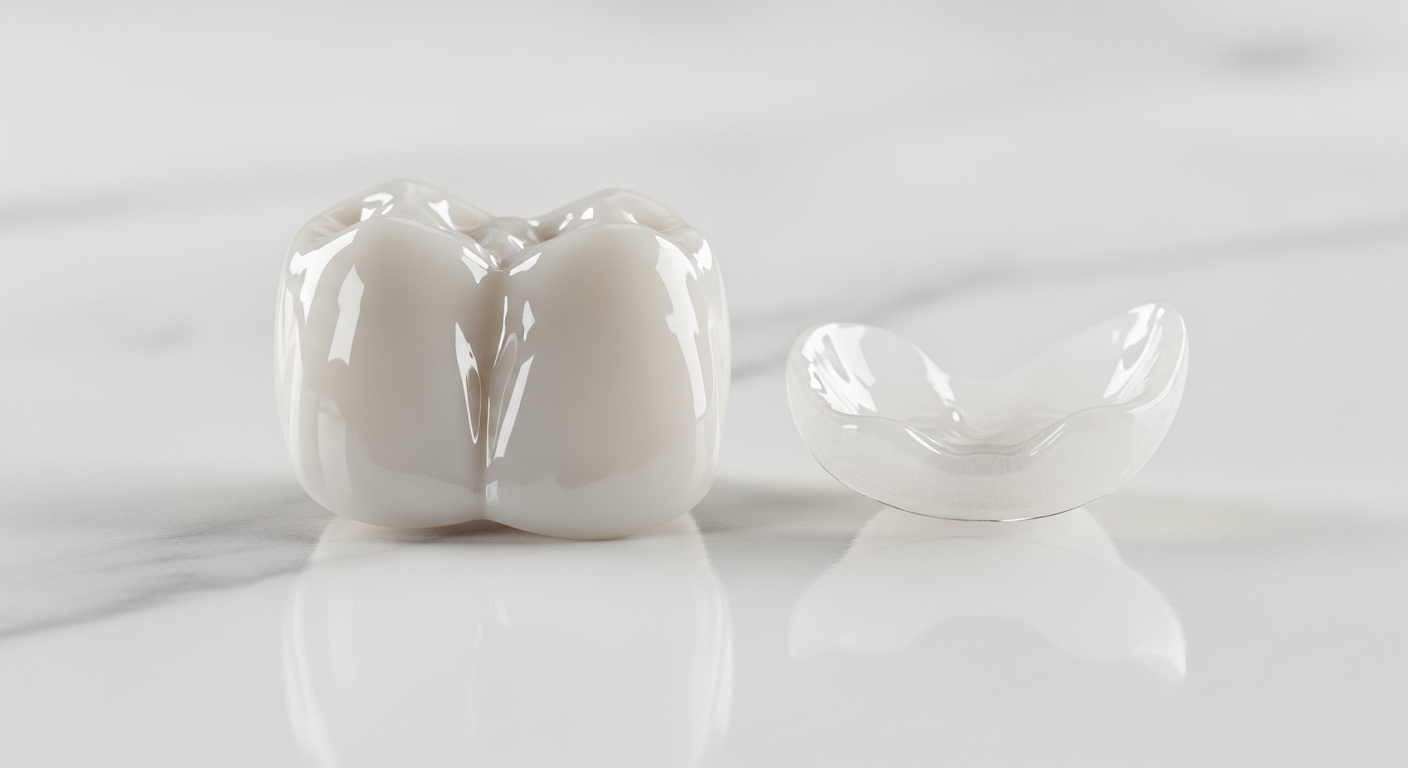
A dental crown is a cap that fits over the entire visible surface of a tooth, from the gum line up. It is cemented in place permanently and restores the tooth's full shape, size, strength, and appearance.
Crowns are typically recommended when a tooth is:
- Severely decayed — too damaged for a standard filling
- Cracked or fractured — to prevent the crack from worsening
- Root canal treated — to protect the weakened tooth structure
- Severely worn down — from grinding or acid erosion
- Broken — where a large piece has broken off
Crowns are made from porcelain, ceramic, metal (gold or silver alloy), or a combination. Porcelain-fused-to-ceramic crowns are the most common choice at Dentinn — they offer excellent durability and a natural appearance.
What Is a Dental Veneer?
A veneer is a thin shell — typically 0.5–1 mm thick — bonded to the front surface only of a tooth. It covers the visible face of the tooth without encasing the entire structure.
Veneers are primarily a cosmetic treatment. They are ideal for teeth that are:
- Stained or discoloured — where professional teeth whitening has not achieved the desired result
- Chipped or slightly irregular — minor shape corrections
- Mildly crowded or spaced — small alignment improvements without orthodontic treatment
- Naturally small — to create more proportional-looking teeth
Veneers are almost always made from porcelain or composite resin. Porcelain veneers are more durable and stain-resistant; composite veneers can be done in a single appointment.
Key Differences at a Glance
- Coverage: Crown covers the entire tooth; veneer covers the front surface only
- Tooth reduction: Crowns require removing more tooth structure; veneers require minimal reduction
- Purpose: Crowns restore function and strength; veneers primarily improve appearance
- Reversibility: Veneers are not fully reversible (some enamel is removed); crowns are permanent
- Durability: Both last 10–15 years or longer with good care
When Is a Crown the Right Choice?
If your tooth has significant structural damage — a large cavity, a crack, or a root canal — a crown is almost always the appropriate treatment. The crown rebuilds the tooth and protects what remains of the natural structure. Choosing a veneer for a structurally compromised tooth would leave the underlying problem unresolved.
Your dentist will assess the amount of healthy tooth structure remaining and recommend accordingly.
When Is a Veneer the Right Choice?
Veneers are the right choice when your tooth is structurally healthy but you are unhappy with its colour, shape, or minor alignment. Because a veneer does not cap the entire tooth, it preserves more of the original enamel — making it a more conservative option for cosmetic improvements. For more significant alignment concerns, our comparison of aligners versus braces covers your orthodontic options.
Importantly, veneers are not suitable for teeth that are severely decayed, heavily restored with large fillings, or subject to heavy biting forces (such as back molars). They are almost exclusively used on the front teeth visible when you smile.
Cost in the Netherlands
In the Netherlands, the cost of crowns and veneers varies by material and clinic — see also our full guide to dental costs in the Netherlands. As a general guide:
- Porcelain crown: €600–€1,100 per tooth
- Composite crown: €200–€500 per tooth
- Porcelain veneer: €700–€1,200 per tooth
- Composite veneer: €150–€400 per tooth
Basic health insurance (basisverzekering) does not cover veneers (cosmetic) or crowns for cosmetic purposes. Crowns required for functional restoration may be partially reimbursed depending on your supplementary insurance plan.
What to Expect at Dentinn Amstelveen
At your consultation, Dr. Aydan Gündoğdu will examine your tooth, take X-rays if needed, and discuss both your dental and cosmetic goals. If multiple teeth are involved, a treatment plan will be drawn up covering the best combination of restorations for your specific situation.
Both crowns and veneers are fabricated in a dental laboratory to fit your bite and match your natural tooth colour. You will usually need two appointments: one for preparation and a temporary restoration, and one to fit the final piece.
Transform Your Smile at Dentinn
Ask about our full cosmetic dentistry options — veneers, whitening, and more. Book a consultation.
Book a Consultation →Frequently Asked Questions
Small fillings on the back of a tooth generally don't prevent veneers. However, large fillings or significantly restored teeth may require a crown instead. Your dentist will advise after examination.
📍 Dentinn Dental Clinic — Biesbosch 217, 1181 JC Amstelveen. Serving patients from Amsterdam, Diemen, and Aalsmeer. Consultations available in Dutch, English, and Turkish. Book your appointment today.