
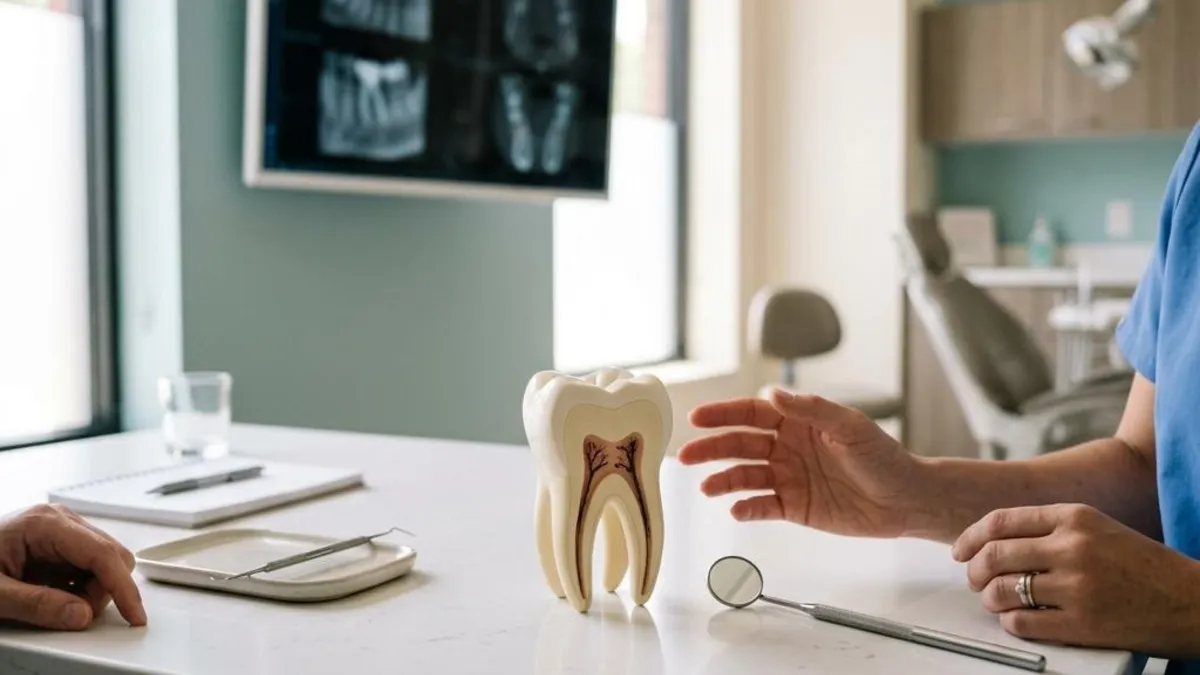
Root Canal or Tooth Extraction: Can the Tooth Still Be Saved?
Can a tooth be saved with a root canal, or does it need to be removed?
A root canal may save a tooth when the pulp inside is infected or damaged but enough healthy tooth and supporting tissue remain to restore it. Extraction removes the tooth and is considered when it cannot be predictably repaired or other clinical factors make keeping it unsuitable. The choice depends on an examination, suitable X-rays and a discussion of the tooth’s long-term restoration—not pain alone.
A severe toothache can make removal sound like the quickest answer. If you are in pain, seek dental advice promptly, but ask what is causing it and whether the tooth is restorable before deciding. This guide is general education, not a diagnosis; an individual assessment is needed.
What does root canal treatment do?
The pulp is soft tissue inside the tooth. If it becomes inflamed or infected, root canal treatment removes the affected tissue, cleans and seals the canals, and aims to retain the tooth. The visible part then needs a durable repair. Depending on how much tooth remains and which tooth it is, that repair may be a filling or a crown; a root filling alone is not always the whole treatment plan.
Leeds Teaching Hospitals NHS Trust explains that endodontic treatment is used to treat or prevent infection inside a tooth and to try to save it. Its patient guide to root canal treatment describes why a tooth may need further restoration. The American Association of Endodontists’ root-canal-versus-extraction guide outlines questions to discuss with your treating dentist. Dentinn’s root canal service in Amstelveen and root canal treatment guide explain the treatment in more detail.
When might a dentist recommend extraction?
A tooth may not be restorable if decay or a fracture extends too far below the gum, too little sound structure remains to support a repair, the root is badly damaged, or infection cannot be managed with available treatment. Severe periodontal support loss can also change the outlook. These are examples, not a checklist that can diagnose your tooth at home; clinical findings determine what applies.
Extraction is not automatically simpler over the long term. If the tooth is removed, you and your dentist may need to decide whether to replace the gap, when to do so and which option suits your mouth. In some cases a space can be monitored; in others, a replacement may help restore function. See Dentinn’s guide to dental implants, implant options after bone loss, and crowns and bridges service.
What should be compared before you decide?
Ask for the whole treatment pathway, not just the first procedure. A comparison should include the likelihood that the tooth can be restored, the repair needed afterwards, expected visits and follow-up, risks and alternatives, and the cost of each stage. Saving a natural tooth can be a reasonable goal, but no treatment lasts forever and no outcome can be promised. Extraction may be the appropriate choice when the tooth cannot be repaired safely.
- Tooth condition: How much healthy tooth remains above and below the gum? Is there a crack, and how does it affect restorability?
- Support and infection: What do the gums, bone and X-rays show? Can the source of infection be treated?
- Final restoration: Will the tooth need a crown or another protective repair after root canal treatment?
- Alternatives after extraction: Is replacement needed in this position, and what are the options?
- Your priorities: How do timing, cost, comfort, health history and maintenance affect your choice?
If the tooth can be saved, the plan may involve root canal treatment followed by a separate restoration. If it is removed, the estimate may include the extraction and, if chosen, a later replacement. Dentinn’s dental visit cost guide can help you understand how a treatment estimate is itemised. Ask your dentist to explain uncertainties before you consent.
When should you seek urgent advice?
Contact a dentist promptly for severe or worsening tooth pain, swelling, a broken tooth or symptoms that disrupt sleep or eating. Facial swelling, fever, difficulty swallowing or breathing, or rapidly spreading swelling needs urgent medical attention. Do not try to drain an abscess yourself or delay care while comparing procedures online. For practical next steps, read Dentinn’s toothache guide and dental emergency guide.
Questions to ask at your appointment
You can take these questions to a consultation in Amstelveen or elsewhere:
- Is the tooth restorable, and what findings support that opinion?
- What would root canal treatment and the final repair involve?
- What are the realistic risks if I keep the tooth, and if I have it removed?
- If it is extracted, do I need to replace it, and can that decision wait?
- Can you provide a written estimate for each option and explain what is included?
Frequently asked questions
No. Root canal treatment is considered when a tooth can be treated and restored; extraction may be appropriate when it cannot. The choice requires an individual examination.
A careful decision starts with an assessment
A root canal and extraction solve different problems: one aims to treat the inside of a restorable tooth, while the other removes a tooth that cannot or should not be kept. Ask for the diagnosis, full sequence of care, alternatives and costs in writing. Dentinn Team provides this general patient information; it is not a personal diagnosis or clinician review. A dentist must assess your tooth before recommending treatment.